
Date: 09/02/2026
Medically Reviewed By: Naveed Javied, PT
Disclaimer: The information in this article is for educational purposes only and does not constitute medical advice, diagnosis, or treatment. Always consult a licensed healthcare professional or physical therapist regarding any rehabilitation program. Never disregard professional medical advice or delay seeking it because of content read here. Use of this information does not establish a patient-provider relationship.
Table of Contents
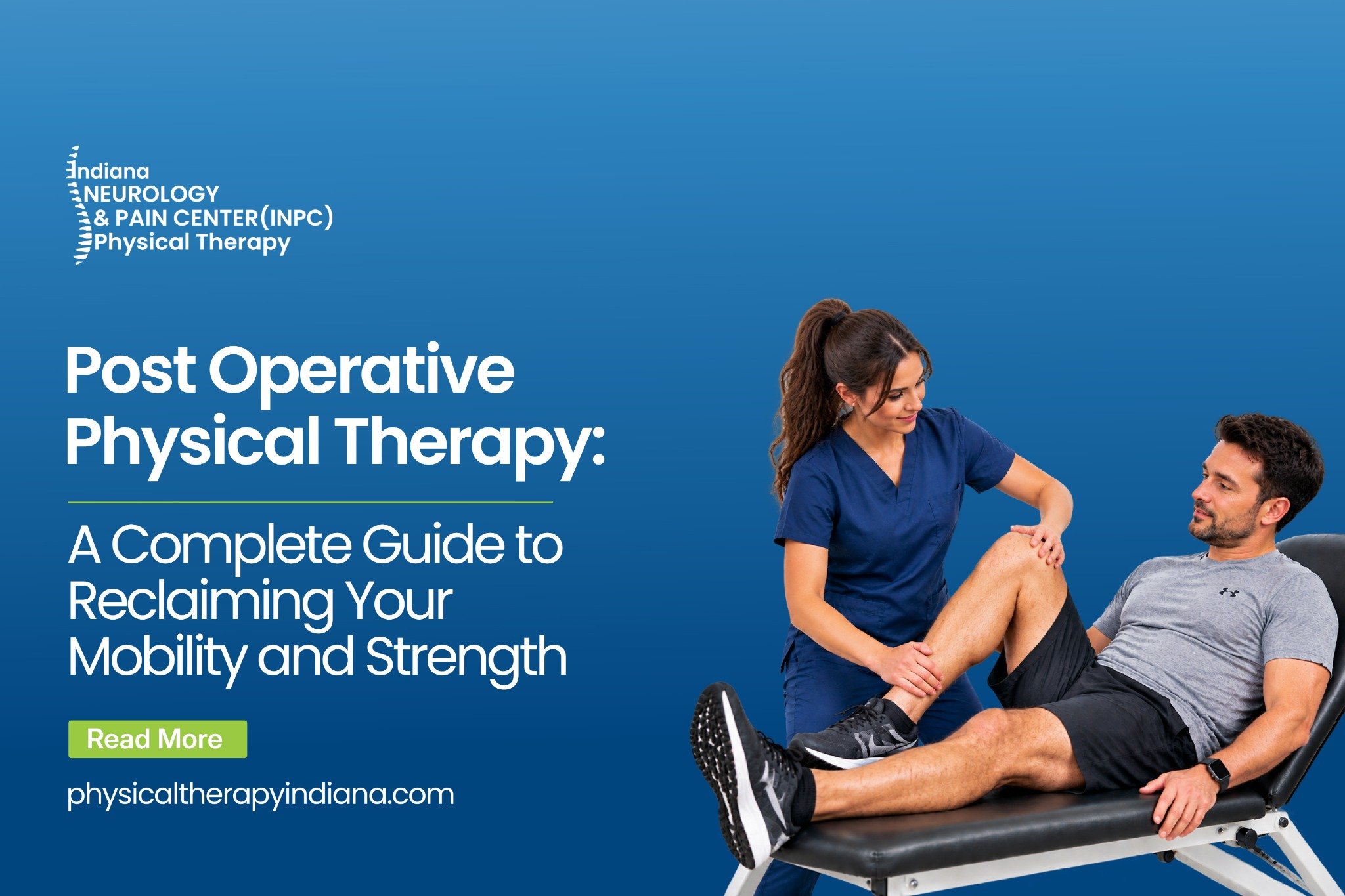
Waking up in the recovery room is just the starting line. Surgery takes an immense toll on the human body, whether it is a routine arthroscopic procedure or a complex joint replacement. Tissues have been altered. Muscles have been moved or cut. And the body’s immediate biological reaction is to guard the area with inflammation and pain. Navigating this vulnerable phase requires more than just rest and medication. In fact, beginning post operative physical therapy shortly after a procedure is the single most critical factor in a safe, complete recovery. Without the right mechanical guidance, healing tissue can quickly turn into rigid, restrictive scar tissue, leaving a person with permanent stiffness.
The days and weeks following an operation are incredibly delicate. It is a time filled with physical discomfort and, quite often, a deep fear of moving the wrong way.
The Physiology of Healing and Post Operative Physical Therapy
To understand why guided movement is mandatory, it helps to look at what the body actually does after a surgical incision.
The human body is an incredibly efficient healing machine, but it lacks refinement. When trauma occurs—which is exactly how the central nervous system interprets surgery—the body rushes to patch the damage. Fibroblasts flood the area and rapidly lay down Type III collagen to close the wound and stabilize the internal structures. This fresh collagen is laid down in a chaotic, tangled web.
If a joint remains entirely immobile during this phase, those tangled webs harden into dense adhesions. Neighboring tissues literally glue themselves together.
This is where post surgical physical therapy changes the trajectory of healing. By introducing specific, controlled tension to the healing tissues, physical therapists apply mechanical stress. This stress signals the cells to realign those chaotic collagen fibers so they sit parallel to the lines of natural movement. The result? The new tissue becomes flexible, strong, and functional instead of turning into a stiff, painful knot.
Muscles that are not bearing weight begin to shrink and weaken in a matter of days. Initiating physical therapy after surgery forces blood flow back into these dormant muscles, delivering oxygen while flushing out the cellular waste products that cause swelling and aching.
Addressing the Mental Toll in Post Operative Physical Therapy
Healing is rarely just a physical challenge. The psychological weight of recovering from a major operation is substantial, yet it rarely gets discussed in standard clinical pamphlets.
Patients routinely experience a heavy sense of vulnerability. A joint that used to support their entire body weight suddenly feels fragile. There is a profound fear of re-injury. People become terrified that a single wrong step or an accidental twist will ruin the surgeon’s work. This fear leads to “guarding,” a subconscious habit where an individual alters their posture or limps to protect the surgical site.
Guarding is dangerous. Walking with a limp for a month to protect a healing knee will inevitably destroy the mechanics of the lower back and the opposite hip.
A massive benefit of working with a skilled professional during rehab after surgery is the psychological anchor it provides. A therapist understands exactly how much tension a newly repaired ligament or tendon can handle. They push the envelope just enough to trigger biological adaptation without crossing the line into damaging territory. When patients see that they can safely bend a joint or bear weight under clinical supervision, that crippling fear begins to dissolve.
The Staged Progression of Recovery
| Phase of Healing | Typical Timeline | Primary Focus | What It Actually Looks Like |
|---|---|---|---|
| I. Acute Protection | Days 1 to 14 | Calming the nervous system, controlling massive swelling, and protecting the fresh repair. | Gentle passive motion (the therapist moves the limb for you), ice therapy, and basic muscle activation. |
| II. Early Mobility | Weeks 2 to 6 | Breaking through the initial stiffness and weaning off assistive devices like crutches. | Active-assisted movements. You start doing the work, but with the support of bands or the therapist’s hands. |
| III. Strength Building | Weeks 6 to 12 | Rebuilding the muscle mass that was lost while resting in bed. | Resistance training, closed-chain exercises, and isolated strengthening of the muscles supporting the joint. |
| IV. Full Function | Months 3 to 6+ | Making the body ready for the unpredictable nature of real life. | Dynamic balance drills, mimicking job duties, or returning to specific athletic movements. |
The transition between these phases is never dictated by the calendar alone. It depends entirely on hitting specific clinical milestones. If the swelling hasn’t gone down, you don’t move to the next phase, no matter how many weeks it has been.
By trusting the process, individuals who commit to post operative physical therapy discover that they can safely bridge the gap between being a surgical patient and returning to an active, unrestricted life.
Modalities and Advanced Techniques
Modern clinics rely on an arsenal of techniques to force the body to adapt. It goes far beyond simply handing someone a resistance band and counting to ten.
Neuromuscular Re-education
Sometimes, after a severe trauma, the brain simply forgets how to talk to a muscle. This is known as arthrogenic muscle inhibition. A person might stare at their thigh, command it to flex, and absolutely nothing happens. Therapists use electrical stimulation devices to forcefully bypass this neurological block, waking the muscle up and reminding the brain how to fire that specific motor pathway.
Manual Therapy and Scar Mobilization
Hands-on techniques are vital. Clinicians use deep tissue massage and joint mobilizations to physically break up stubborn scar tissue. This hands-on approach keeps the joint capsule pliable and reduces the deep, aching pain associated with stiffness.
For individuals who cannot tolerate their own body weight on a healing joint, water provides a miraculous environment. The buoyancy of a pool unloads the joints, allowing someone to walk perfectly normal underwater weeks before they could ever do it on dry land.
The sheer variety of tools and techniques used during post operative physical therapy ensures that no matter what complications arise, there is a clinical strategy to overcome it. Post op physical therapy adapts to the patient, not the other way around.
| Common Recovery Myth | The Clinical Reality |
|---|---|
| “Rest is the best medicine after a surgery.” | Total rest actually promotes dangerous blood clots and guarantees permanent joint stiffness. Movement is medicine. |
| “If rehab hurts, it means I am damaging the surgery.” | There is a difference between the “good pain” of stretching scar tissue and the “bad pain” of tearing a repair. Discomfort is mandatory; sharp pain is not. |
| “I can just do the exercises at home by myself.” | Home exercises are vital, but a trained eye is required to correct dangerous compensatory movements and apply manual joint mobilizations you physically cannot do to yourself. |
Moving Forward With Confidence

Naveed Javied, PT
Physical Therapist
Naveed Javied is a highly skilled physical therapist specializing in orthopedic rehabilitation. He earned his Doctor of Physical Therapy from the University of Montana, building upon his Master of Physical Therapy from Quinnipiac College. With extensive clinical experience, including specialized orthopedic care at Oakwood Annapolis Hospital, Javied focuses on helping patients effectively manage pain and restore their mobility.
Frequently Asked Questions
For many procedures, such as total hip or knee replacements, therapists are in the hospital room the very next morning. Early mobilization prevents deep vein thrombosis (blood clots) and gets the lungs expanding fully. For more delicate surgeries like rotator cuff repairs, a surgeon might demand a period of strict immobilization for a few weeks before hands-on therapy begins. Always follow the specific timeline set by the operating surgeon.
There is no universal answer because every body heals at a different metabolic rate. A minor arthroscopic clean-out might only require a month of post surgery physical therapy. On the other hand, a complex multi-ligament knee reconstruction or a multilevel spinal fusion will easily demand six to nine months of intense, progressive rehabilitation to reach maximum medical improvement.
Skipping post surgery rehabilitation is perhaps the biggest mistake a patient can make. Without it, the risk of developing joint contractures (where the joint freezes in place) skyrockets. You also risk tearing the surgical repair once you return to normal life because the supporting muscles were never properly rebuilt to handle the load.
The human body is highly adaptable. While a surgically repaired joint might always feel slightly different than it did before the original injury, a comprehensive rehabilitation program is designed to get you back to 100% of your functional goals—whether that means running a marathon or simply being able to get down on the floor to play with your grandchildren without pain.
References
https://pmc.ncbi.nlm.nih.gov/articles/PMC4407119/
https://pmc.ncbi.nlm.nih.gov/articles/PMC12430879/