
Date: 08/17/2026
Medically Reviewed By: Naveed Javied, PT
Disclaimer: The information in this article is for educational purposes only and does not constitute medical advice, diagnosis, or treatment. Always consult a licensed healthcare professional or physical therapist regarding any rehabilitation program. Never disregard professional medical advice or delay seeking it because of content read here. Use of this information does not establish a patient-provider relationship.
Table of Contents
Going under the knife is a massive shock to the system. Whether it’s a scheduled joint replacement you’ve been anticipating for a year, or an emergency fix for a blown-out knee from a weekend basketball game, the operating room only handles the mechanical side of the equation. Scalpels, bone saws, and sutures repair the structural damage—like a torn rotator cuff or a compressed spinal nerve. But true, functional healing? That actually starts the second you wake up in the recovery ward.
A lot of people operate under the dangerous assumption that lying perfectly still in bed is the best way to heal. It’s really not. Committing to rehab post surgery is the single biggest factor separating a phenomenal recovery from a lifelong limp. Surgery repairs the physical structure, but physical therapy is what actually restores the biomechanical function. If you skip the follow-through, you risk undoing everything the orthopedic team just spent hours fixing. Your body is an incredible machine, but it is notoriously lazy. If you don’t force it to adapt to movement, it simply won’t.
The Hidden Phase: Why Rehab Actually Starts Before Surgery
Before we even dive into the post-op world, we need to talk about “pre-hab.” If you know you have a surgery coming up in a month, sitting around waiting for the date is a wasted opportunity. The stronger you are going into an operation, the faster you bounce back. It’s really that simple.
Think of it like preparing for a marathon. You wouldn’t just show up on race day without training. Engaging in a few weeks of physical therapy before your procedure helps build localized muscle strength and improves your baseline range of motion. If a quad muscle is already weak and atrophied before a knee replacement, the surgical trauma is going to knock it down to absolute zero. If you build it up beforehand, it has a buffer. Pre-hab also teaches you how to use crutches, walkers, and slings while you still have your full wits about you, rather than trying to learn entirely new motor skills while groggy on hospital anesthesia.
Why You Can’t Skip Rehab Post Surgery
Surgery, by its very definition, causes intentional trauma. Muscles get sliced open, tissues are stretched to their limits, and nerves get highly aggravated by metal retractors. Your nervous system doesn’t know the surgeon was trying to help; it just registers a massive physical assault and instantly throws the surrounding area into a protective lockdown.
Without targeted movement, your body’s default healing mechanism is to throw down thick, messy layers of scar tissue to patch the structural holes. That inevitably leads to stiff joints, nerve impingements, and severe muscle wasting. Post op rehabilitation stops this downward spiral dead in its tracks.
The human body requires physical stress to know how to rebuild itself properly. Wolff’s Law dictates that bone grows and remodels in response to the forces placed upon it, and the exact same principle applies to tendons and ligaments. If you sit on the couch for three solid weeks, your body assumes you don’t need those muscles or that joint mobility anymore and rapidly starts breaking them down to save energy. A skilled physical therapist uses highly calculated movements to send mechanical signals to your tissues. These signals tell your cells exactly how to align the new collagen fibers so they can eventually handle the heavy stress of daily life.
On top of the purely musculoskeletal benefits, moving early prevents dangerous, life-threatening systemic issues. Lying flat in bed makes your blood pool in your lower extremities, which drastically spikes your risk for developing a deep vein thrombosis (a blood clot). If that clot breaks loose, it can travel to your lungs. Deep breathing exercises, ankle pumps, and early supervised walking are absolutely non-negotiable for keeping your circulation moving and your lungs clear of fluid.
Healing Phases During Rehab Post Surgery
Let’s look at how the body actually repairs itself at a microscopic cellular level. It definitely doesn’t happen overnight, and no amount of wishing will let you rush biological healing timelines.
The Inflammatory Phase (Days 1 to 6):
Right after the procedure, your body purposefully floods the surgical site with blood, white blood cells, and highly specialized healing factors. Expect heat, visible swelling, redness, and a fair amount of throbbing pain. Early surgical rehab is incredibly gentle during this window. The main goal isn’t to get stronger; it’s to keep the joint from freezing up without tearing the fresh internal stitches or pulling the bone anchors out. You’ll mostly do passive motions where the therapist completely supports the weight of the limb and moves it for you.
The Proliferative Phase (Days 3 to 20):
This is when your body genuinely starts laying down new collagen. Think of this process like pouring wet, fresh concrete. If you don’t move at all, that concrete sets in a tight, messy clump that binds everything together. Controlled post surgical rehabilitation makes sure those new, fragile collagen fibers stretch out and line up neatly along the lines of physical stress. This directly prevents the formation of internal adhesions that limit your range of motion later on.
The Remodeling Phase (Week 3 to 2 Years):
Welcome to the long haul. The tissue slowly gets thicker, tougher, and much stronger. The new collagen fibers reorganize themselves based strictly on the physical demands you place on them. This is where your therapy sessions start to feel less like a medical treatment and more like an actual gym workout. You’ll lift progressively heavier weights, work on unstable surfaces for balance, and eventually do explosive movements to prep the limb for real-world stress.
Core Phases of Post Operative Rehabilitation
You absolutely don’t jump out of the hospital bed and start running miles. Recovery happens in strictly monitored, scientifically backed phases. Move too fast, and you risk ruining the surgeon’s meticulous hard work and ending up right back on the operating table. Move too slow, and you end up stiff, weak, and frustrated.
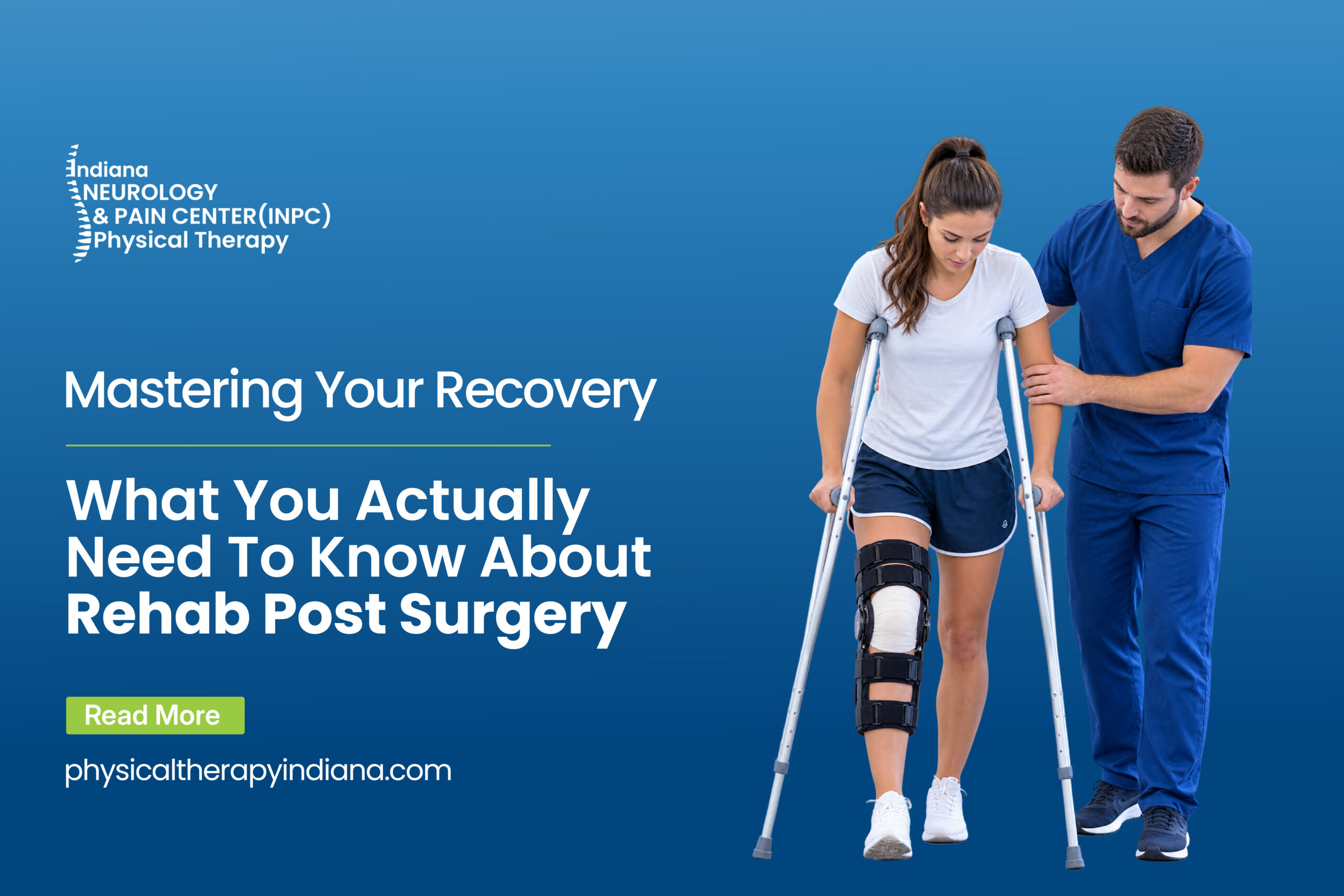
During the first few weeks, it’s all about maximum protection. You might be locked in a heavy brace or relying heavily on crutches. The therapy primarily focuses on controlling the massive inflammatory response and gently waking up the nervous system. When you engage in rehab post surgery, you’re literally signaling to your brain that the limb is still there and still needs to function.
By week four to six, you usually transition into the moderate protection phase. You start ditching the crutches, practice walking normally without a severe limp, and begin light bodyweight resistance training.
By months two and three, the training wheels finally come off. The internal surgical repair is usually strong enough to handle moderate to heavy loads, so you start doing things like squats, deep lunges, and overhead presses, depending entirely on the specific surgery you had. Finally, the return-to-function phase kicks in. If you’re a competitive athlete, you start sprinting, jumping, and cutting on turf. If you work a physical labor job, you practice lifting heavy boxes and climbing ladders. The ultimate goal is to make sure you can handle your specific life demands without a second thought or a wince of pain.
Beating Complications with Rehab Post Surgery
Scar tissue (arthrofibrosis) is the absolute enemy of fluid, painless motion. If it binds a muscle directly to a nerve, or glues a gliding tendon to a rigid bone, you’re going to feel a sharp, restrictive pulling sensation every single time you reach for a high cabinet or stand up from a low chair. Physical therapists dig in with aggressive manual myofascial release techniques to break up those stubborn adhesions. It doesn’t always tickle—in fact, it can be pretty intense and uncomfortable—but it’s wildly effective for restoring normal joint mechanics.
Another major complication is profound muscle inhibition. Sometimes, the sheer trauma of the surgery causes the brain to temporarily “turn off” the muscles surrounding the joint to protect it from further pain. You can sit there and try as hard as you want, but your quad or rotator cuff simply won’t fire. Therapists use specific, targeted techniques to essentially hack the nervous system and force those dormant muscles to wake up and rejoin the fight.
| Recovery Phase | Typical Timeline | Main Focus during Surgical Rehabilitation | What You Actually Do in the Clinic |
|---|---|---|---|
| Phase 1: Maximum Protection | Weeks 1–4 | Stop swelling, protect the surgical repair, restore basic passive motion. | Ice packs, tiny isometric muscle squeezes, learning to use crutches safely. |
| Phase 2: Early Active Motion | Weeks 4–8 | Ditch the crutches, walk normally, start light bodyweight loading. | Stationary biking, pool therapy, assisted stretching against resistance bands. |
| Phase 3: Real Strength | Weeks 8–12 | Build muscular stamina, fix lingering balance and proprioception issues. | Free weight training, one-legged balance drills, heavy core stabilization. |
| Phase 4: Return to Normal Life | Months 3–6+ | Get back to heavy lifting, recreational sports, or demanding jobs. | Jumping, fast directional changes, simulating job-specific lifting mechanics. |
How Different Surgeries Require Different Approaches
Not all surgeries are created equal, and neither are their rehab protocols. A one-size-fits-all approach is a recipe for disaster in physical therapy.
Total Joint Replacements (Knees and Hips):
The primary goal here is early, aggressive weight-bearing. Because the arthritic, painful bone has been completely replaced with titanium and medical-grade plastic, the structural integrity is immediately strong. The challenge is getting the surrounding muscles, which have likely been weak for years due to arthritis, to finally support the new hardware. Range of motion is pushed hard and early to prevent the joint capsule from permanently shrinking.
Ligament and Tendon Reconstructions (ACL, Rotator Cuff, Achilles):
These are a completely different beast. When a surgeon sews a tendon back together, or drills a new ligament into bone, that tissue is incredibly fragile for the first six weeks. If you stretch it too far or load it too heavily, it will snap. Rehab for these procedures is notoriously slow and highly conservative in the beginning. Therapists have to walk a razor-thin line between preventing stiffness and protecting the delicate graft.
Spinal Surgeries (Fusions and Microdiscectomies):
Spinal rehab revolves entirely around core stability and protecting the delicate nerve roots. Bending, lifting, and twisting are strictly prohibited early on. The focus is on teaching the patient how to move like a solid cylinder, locking down the core muscles so the spine doesn’t twist while the fused bones heal into a solid mass.
Tools of the Trade in Post Surgical Rehab
Therapists do a lot more than just hand out a printed sheet of generic stick-figure exercises and watch you count reps. They use a highly specialized mix of hands-on manual work and modern physiological technology to force the body to adapt and overcome the surgical trauma.
Manual Joint Mobilizations:
Sometimes the actual capsule surrounding the joint gets totally glued shut from the persistent inflammation. A therapist physically pushes, pulls, and glides the joint surfaces to stretch out that deep, restrictive connective tissue. You literally cannot do this to yourself at home. It requires an outside force applying leverage in very specific, graded directions.
Blood Flow Restriction (BFR) Training:
This is an absolute game-changer for early surgical rehab. A specialized, computer-calibrated tourniquet is placed around the upper arm or thigh to partially restrict venous blood flow. This tricks the brain into thinking the muscle is working incredibly hard and starving for oxygen, even if you’re only lifting a tiny two-pound weight. It allows you to build real muscle size and strength without putting dangerous, heavy loads on a fragile, newly repaired joint.
Neuromuscular Electrical Stimulation (NMES):
Remember that muscle inhibition we talked about earlier? NMES fixes that exact problem. Sticky electrode pads are placed directly over the dead muscle belly, and a targeted electrical current forces it to contract involuntarily. Over time, this repetitive signaling helps re-establish the broken brain-to-muscle connection so you can finally fire the muscle naturally.
The Mental Grind and Managing Pain
Let’s be brutally honest about the reality of recovery. Recovering from a major operation is physically and mentally exhausting. You will absolutely have days where you feel invincible and think you’re weeks ahead of schedule, followed immediately by days where everything aches and you feel like you’ve gone totally backwards. That “two steps forward, one step back” rhythm is a completely normal part of the physiological remodeling process.
A massive hurdle for many patients is kinesiophobia—the intense, paralyzing fear of movement. When a knee or shoulder has hurt for months, and then gets aggressively sliced open, your brain becomes terrified of moving that body part. A good physical therapist acts as a psychological guide, pushing you safely past that mental block while explicitly ensuring the joint is protected. Sticking with your rehab post surgery on the days you feel exhausted, sore, and defeated is what actually moves the needle toward recovery.
Pain management is also a crucial balancing act. While prescription pain medication is often necessary for the first few days, relying on it heavily masks the body’s natural warning signals. Physical therapy is the most effective long-term pain management strategy. By restoring proper mechanics and reducing joint inflammation through movement, the reliance on heavy narcotics drops dramatically.
Your lifestyle outside the clinical environment matters just as much as the exercises you do inside it. Eating processed junk food drastically slows down cellular repair by spiking systemic, whole-body inflammation. Skimping on sleep physically robs your body of the natural growth hormones it needs to rebuild dense muscle and tendon tissue.
| Lifestyle Choice | The Right Move for Healing | The Wrong Move that Slows Progress |
|---|---|---|
| Daily Diet | High-quality lean protein, leafy greens, and massive amounts of water. Your body desperately needs raw building blocks. | Heavy drinking, smoking, and processed sugar (which dramatically spikes joint inflammation). |
| Sleep Habits | 8+ hours a night, using specific wedges or pillows to prop up the limb and reduce gravity-induced swelling. | Staying up late, or stubbornly trying to sleep on the surgical side way too early against doctor’s orders. |
| Therapy Homework | Doing the prescribed at-home exercises exactly as told, every single day, with good form. | Sitting on the couch all weekend hoping the joint magically heals itself while watching TV. |
Setting the Stage: The Hidden Power of "Pre-Hab"

Naveed Javied, PT
Physical Therapist
Naveed Javied is a highly skilled physical therapist specializing in orthopedic rehabilitation. He earned his Doctor of Physical Therapy from the University of Montana, building upon his Master of Physical Therapy from Quinnipiac College. With extensive clinical experience, including specialized orthopedic care at Oakwood Annapolis Hospital, Javied focuses on helping patients effectively manage pain and restore their mobility.
Frequently Asked Questions
It heavily depends on exactly what got fixed, your age, and your baseline fitness. A quick knee arthroscopy to clean up some frayed cartilage might only need four to six weeks of dedicated physical therapy. A massive procedure like a total hip replacement, a multi-level spinal fusion, or a complex ACL reconstruction? Plan on dedicating three to nine months of hard, consistent work before things feel completely normal, stable, and strong again.
Usually, immediately. In many modern orthopedic hospitals, they literally have you standing up and putting partial weight on a new joint the exact same day you get a hip or knee replaced. Outpatient clinic therapy usually kicks off within three to seven days after you go home. Delaying therapy is a terrible idea—it invites massive, restrictive scar tissue problems and makes the eventual stretching process far more painful than it ever needed to be.
You just had your body cut open with scalpels and saws, so there is going to be a baseline level of surgical ache. Stretching tight, angry tissues will definitely be uncomfortable. Waking up weak, dormant muscles will absolutely cause next-day soreness. But a good physical therapist explicitly knows the difference between “productive, tissue-stretching pain” and “dangerous, repair-damaging pain.” They know the surgeon’s exact protocol and will absolutely not push you past the point of structural safety.
References
Principles of Tendon Reconstruction Following Complex Trauma of the Upper Limb.
Seminars in Plastic Surgery, 29, 030-039.
https://doi.org/10.1055/s-0035-1544168
Neuromuscular Electrical Stimulation.
Sports Medicine, 13, 320-336.
https://doi.org/10.2165/00007256-199213050-00003
Wound Healing Phases.
StatPearls Publishing.
https://www.ncbi.nlm.nih.gov/books/NBK470443