
Date: 08/05/2026
Medically Reviewed By: Dr. Samiullah Kundi, MD, Board-Certified Physician
Disclaimer: The information in this article is for educational purposes only and does not constitute medical advice, diagnosis, or treatment. Always consult a licensed healthcare professional or physical therapist regarding any sports injury or rehabilitation program. Never disregard professional medical advice or delay seeking it because of content read here. Use of this information does not establish a patient-provider relationship.
Table of Contents
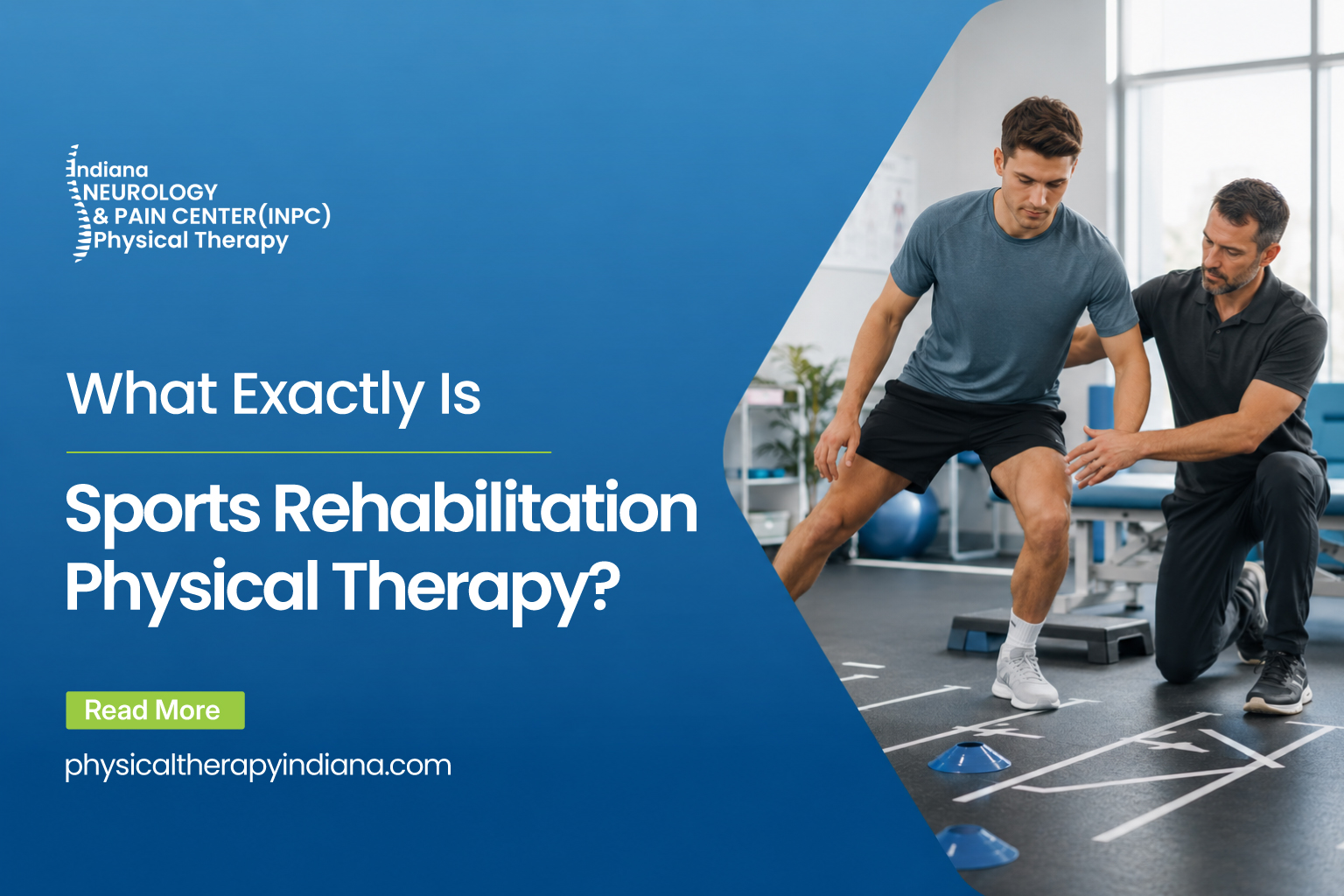
It is surprisingly common for people to confuse standard physical therapy with athletic rehabilitation. They are not the same.
General physical therapy fundamentally aims to restore basic activities of daily living. Think walking up a flight of stairs without wincing, carrying groceries, or sitting comfortably at an office desk. Sports rehabilitation physical therapy operates on an entirely different wavelength.
Athletic movements subject the human body to brutal kinetic forces. The violent deceleration of a basketball player landing a jump, the extreme shoulder torque of a baseball pitch, and the heavy compressive loads of powerlifting require specialized functional strength. A generalized therapy program simply cannot prepare a healing joint for the chaotic, high-velocity demands of competitive or recreational sports.
The Mindset of a Sports Rehab Therapist
A dedicated sports rehab therapist functions somewhat like a biomechanical detective. They rarely just look at the site of the pain.
If a runner comes in with severe knee pain, the therapist doesn’t solely treat the knee. They analyze the entire kinetic chain. Does the patient have weak hip abductors causing the femur to rotate inward? Is a stiff ankle joint forcing the knee to absorb excess shock? By identifying and correcting the root cause of the movement dysfunction, sports therapy and rehabilitation programs don’t just heal the current injury—they actively bulletproof the body against future ones.
The Anatomy of an Athletic Injury
Walk into any of the top sports rehabilitation centers, and you will see a massive spectrum of musculoskeletal damage. Broadly speaking, these injuries fall into two distinct buckets: acute trauma and overuse.
Acute injuries are the dramatic ones. A sudden impact, an awkward collision on the field, or a misjudged landing. They happen in a fraction of a second. Overuse injuries are the silent creepers. They develop gradually from repetitive micro-trauma—doing the exact same motion thousands of times without giving the tendons or bones enough time to recover and adapt.
Here is a look at the typical cases handled by an athletic rehabilitation center.
Table 1: Common Injuries and Targeted Sports Rehabilitation
| Injury Profile | Mechanism (Acute vs. Overuse) | Primary Rehabilitation Goal | Typical Clinical Interventions |
|---|---|---|---|
| ACL Reconstruction | Acute: Decelerating rapidly or pivoting with a planted foot. | Restoring terminal knee extension and dynamic joint stability. | Blood Flow Restriction (BFR), neuromuscular electrical stimulation, heavy plyometrics. |
| Rotator Cuff Tendinopathy | Overuse: Repetitive overhead torque (swimming, serving a tennis ball). | Reducing tendon inflammation; fixing scapular movement patterns. | Eccentric loading, manual joint mobilization, instrument-assisted scraping. |
| Achilles Rupture or Tendinitis | Acute/Overuse: Explosive acceleration off the line or chronic calf tightness. | Rebuilding ankle dorsiflexion and explosive push-off power. | Heavy slow resistance (HSR) protocols, shockwave therapy, gait retraining. |
| Patellofemoral Pain (Runner’s Knee) | Overuse: Poor patellar tracking, often stemming from weak glutes. | Strengthening the posterior chain to align the lower extremity during movement. | Closed kinetic chain squats, biofeedback, video running analysis. |
| Lateral Epicondylitis (Tennis Elbow) | Overuse: Overloading the wrist extensors through repetitive gripping. | Modulating localized pain and correcting proximal shoulder mechanics. | Dry needling, eccentric wrist strengthening, soft tissue mobilization. |
The Four Non-Negotiable Phases of Recovery
Healing cannot be rushed. Tissues heal on biological timelines, not personal schedules.
Elite sports rehabilitation clinics rely on a strict, criteria-based progression model. Patients do not simply advance to harder exercises because a few weeks have passed. They advance because they physically demonstrate specific milestones. Earning the right to progress keeps athletes safe.
The recovery timeline after sports rehabilitation is universally broken down into four distinct phases.
Phase 1: Putting out the Fire (Acute Management)
In the days immediately following a massive tissue injury or surgery, the body is in crisis mode. The inflammatory response kicks in, bringing swelling, heat, and sharp pain. During this window, the primary goal of any sports rehab physical therapy program is simple: protect the healing tissue and stop muscle atrophy before it starts.
If you completely immobilize a joint, the surrounding muscles begin wasting away within days. Therefore, treatments in this early stage involve carefully managing the damage while keeping the neuromuscular system awake.
- Protection: Utilizing rigid braces, crutches, or walking boots.
- Swelling control: Aggressive use of compression and elevation.
- Passive movement: The therapist manually moves the joint through its safe range of motion to prevent heavy scar tissue from locking it down.
- Isometrics: Contracting the muscles hard without actually moving the joint. This keeps the brain-muscle connection firing without stressing the fragile, newly healing tissue.
Phase 2: Rebuilding the Foundation (Mobility and Strength)
Once the swelling drops and the tissue stabilizes, the real work begins. Phase two is all about taking the brakes off.
The joint needs to regain its full, normal arc of motion. At the same time, the muscles surrounding the joint need to be re-introduced to load. Loading tissue properly encourages collagen fibers to align strongly, rather than healing in a disorganized, weak clump.
- Active range of motion: Transitioning from the therapist moving the limb to the patient moving it entirely under their own power.
- Foundational lifting: Moving from open-chain exercises (like a seated leg kick) to closed-chain exercises (like a weighted squat where the foot is firmly planted).
- Aerobic maintenance: Athletes lose their cardio base quickly. Using alternative methods like an underwater treadmill or an assault bike keeps the heart and lungs conditioned while the injured limb heals.
Phase 3: Rewiring the Brain (Proprioception and Control)
Strength is useless if the brain doesn’t know how to deploy it fast enough.
Following a major injury, proprioception—the body’s invisible sense of where it is in space—gets heavily scrambled. An athlete might have strong quads, but if their nervous system hesitates for a split second when landing a jump, the knee will blow out again. A sports rehabilitation therapist uses phase three to intentionally destabilize the patient.
- Balance chaos: Doing heavy lifts on unstable surfaces like foam pads or BOSU balls.
- Reactive training: Having the therapist unexpectedly push or pull the athlete during a movement, forcing the body to reflexively stabilize.
- Eccentric loading: Forcing the muscle to slowly lengthen under massive tension, which builds the critical “brakes” needed to absorb shock.
- Light plyometrics: Introducing the early stages of hopping and bounding.
Phase 4: Return to the Arena (Sport-Specific Simulation)
The final phase bridges the massive gap between a clinical environment and the chaotic reality of live sports. It is an important stage in the sports rehabilitation.
This stage is brutal by design. It has to perfectly mimic the exact metabolic and physical stresses the athlete will face on the field, court, or track. Building physical readiness is obvious here, but building psychological confidence is the hidden objective. An athlete who hesitates is an athlete who gets hurt.
- High-velocity agility: Hard cutting, sprinting, and multi-directional pivoting.
- Skill under fatigue: Forcing a baseball player to throw pitches or a soccer player to strike a ball only after they have been pushed to exhaustion.
- Advanced power: Maximum effort box jumps, medicine ball throws, and heavy Olympic lifting variations.
Table 2: Earning the Right to Play (Progression Criteria)
| Healing Phase | The Milestones You Must Hit | What the Work Looks Like |
|---|---|---|
| Moving to Phase 2 | Zero resting pain. Swelling under control. Basic tissue healing complete. | Gentle stationary biking, isometric holds, passive stretching. |
| Moving to Phase 3 | Normal walking pattern without a limp. Full joint mobility. 75% strength compared to the uninjured side. | Goblet squats, step-downs, single-leg balancing. |
| Moving to Phase 4 | Can hop without pain. 90% strength symmetry. Elite balance control. | Heavy lunges, agility ladder sprints, box jumps. |
| Cleared for Live Sports | 95%+ symmetry on objective force-plate tests. Mentally confident. Can simulate a full game pain-free. | Unrestricted sprinting, contact drills, full-speed directional changes. |
Heavy Artillery: Advanced Sports Rehabilitation
You can’t cheat the work of lifting weights and doing the exercises, but modern sports rehabilitation services use incredible technology to optimize the healing environment. These interventions are the accelerators.
Blood Flow Restriction (BFR) Training
Imagine trying to lift a heavy barbell just weeks after knee surgery. You can’t. The joint would fail. BFR solves this. A specialized medical tourniquet is wrapped around the upper thigh or arm, partially restricting blood flow. This tricks the brain into thinking the muscle is working at maximum capacity. The patient lifts incredibly light weights, yet the muscles grow and strengthen as if they were squatting 300 pounds. It is a game-changer for early recovery.
Instrument-Assisted Soft Tissue Mobilization (IASTM)
Scar tissue is stubborn. Clinicians use aggressively contoured metal or plastic tools to physically scrape the skin and underlying fascia. This localized friction breaks up dense scar tissue, triggers a controlled inflammatory response to jumpstart stagnant healing, and restores sliding surfaces between muscles.
High-Speed Biomechanical Analysis
The naked eye lies. By putting a runner on a treadmill or a pitcher on a mound surrounded by high-speed cameras, software breaks down their movement frame by microscopic frame. Clinicians find the tiny, millisecond energy leaks—like an ankle rolling inward just before push-off—that cause massive structural damage over time.
Dry Needling
When muscles are chronically overloaded, they form tight, painful knots called trigger points. A therapist inserts a hair-thin monofilament needle directly into the core of the knot. The muscle violently twitches and then immediately releases, flooding the area with fresh blood and instantly killing the pain signal.
Knowing What to Look For in a Clinic
If you are looking for an athletic rehabilitation center, do not just walk into the closest generic facility. You need an environment built for performance.
Ask about credentials. Look for a facility where the staff hold specialized board certifications, such as a Sports Certified Specialist (SCS) or an Orthopedic Certified Specialist (OCS).
Take a hard look at the floor plan. Standard clinics are packed with treatment tables and light resistance bands. Top-tier sports rehab physical therapy requires space. You need heavy squat racks, long stretches of turf for sprinting, and highly specialized testing equipment to objectively measure force output.
Most importantly, demand one-on-one attention. High-level movement correction requires a therapist watching your mechanics like a hawk. If a clinic operates by having one therapist juggle three patients at once while an untrained aide counts your reps, walk away. You cannot rebuild elite athletic movement in a factory setting.
Reclaiming Your Ground
Naveed Javied, PT
Physical Therapist
Naveed Javied is a highly skilled physical therapist specializing in orthopedic rehabilitation. He earned his Doctor of Physical Therapy from the University of Montana, building upon his Master of Physical Therapy from Quinnipiac College. With extensive clinical experience, including specialized orthopedic care at Oakwood Annapolis Hospital, Javied focuses on helping patients effectively manage pain and restore their mobility.
Frequently Asked Questions
There is no universal answer. A mild ankle sprain might have you back on the field in three weeks. Rebuilding an ACL or a torn Achilles tendon is a grueling 9-to-12-month process. Tissue biology dictates the timeline, not willpower.
Usually, no. In many areas, “direct access” laws legally allow a patient to walk right into a clinic and be evaluated by a physical therapist without seeing a physician first. However, specific insurance policies often still demand a doctor’s referral before they agree to pay the bill. Always call the clinic’s front desk to verify your coverage rules.
Absolutely not. If you are a firefighter hauling heavy gear, a construction worker navigating uneven ground, or just someone who wants to hike on the weekends without their knees screaming, the exact same principles apply. Sports therapy and rehabilitation is about building a durable, resilient human body, regardless of whether you wear a jersey or a suit.
Athletic trainers are the first responders of the sports world. They are on the sidelines dealing with the immediate trauma—taping ankles, managing concussions, and keeping athletes safe during the game. A sports rehabilitation therapist handles the long game. They take over in the clinic, diagnosing the structural failures and mapping out the months-long physiological process to rebuild the athlete from scratch.